
Calvados: What it is and How to Taste It. A Guide to the Sensory Experience
Calvados is an apple brandy produced in the heart of Normandy, the fruit of a centuries-old tradition that blends terroir, savoir-faire, and patience. Unlike many other spirits, Calvados stands out for the agricultural origin of its main ingredient: cider. It is not made from a sweetened must, but from a true fermented juice of apples (and sometimes pears), hand-picked in the orchards of Normandy.
The name “Calvados” is now protected by controlled designations of origin (AOC), among which the most prestigious are:
-
Calvados AOC
-
Calvados Pays d’Auge AOC
-
Calvados Domfrontais AOC
Among these, Pays d’Auge is considered the most refined: it requires double distillation in copper stills and the use of selected apples with a perfect balance of sugars, acidity, and tannins.
The Terroir of Normandy: Soul and Structure of Calvados
The secret of Calvados lies in its terroir: a green and windy landscape, where apple trees grow on clay and limestone soils exposed to Atlantic influence. It is this combination that gives the apple its aromatic complexity, which we find in the finished distillate.
The apples used belong to specific varieties:
-
Sweet-bitter, for structure and depth
-
Bitter, for tannins
-
Acidic, for freshness
An authentic Calvados is always born from a balance of these three components. The most serious producers, such as Domaine Dupont, cultivate organically or with integrated farming and ferment the apple juice directly on site, to preserve the fruit's identity.
How to Taste Calvados: A Guide to the Sensory Experience
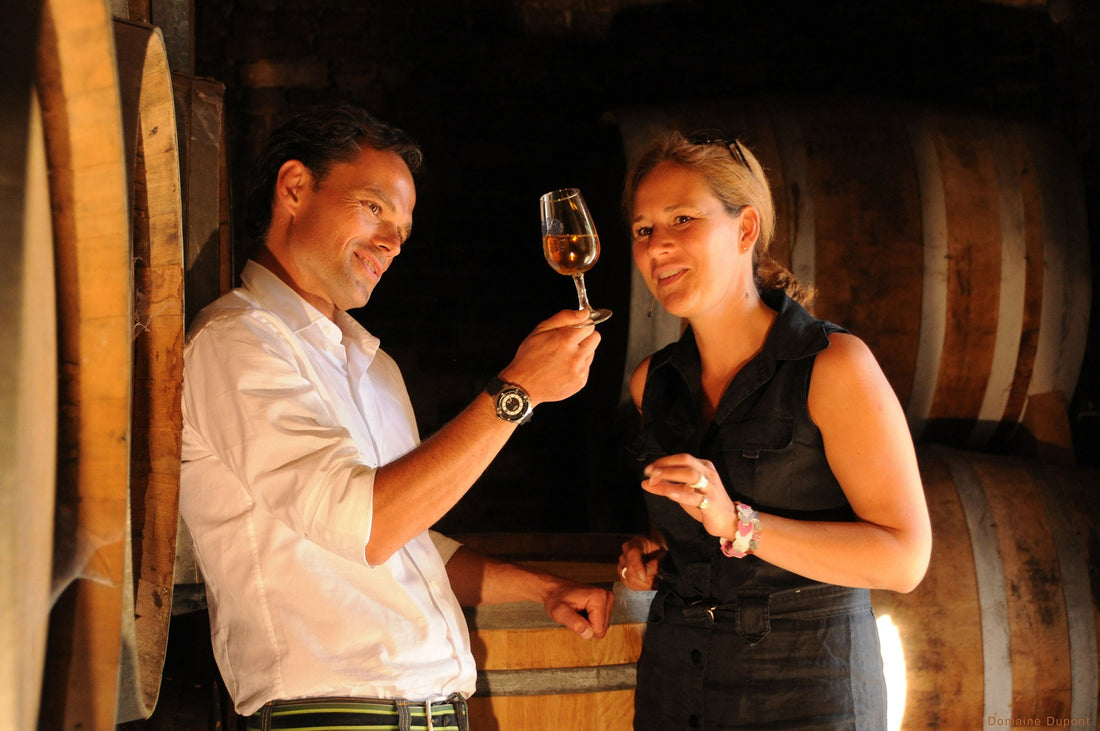
Tasting Calvados is not simply drinking it, but listening to it. Every bottle is a narrative of time and place. Here's how to do it mindfully:
1. The right temperature
-
16–18°C for a young Calvados (Fine, VS)
-
18–20°C for aged Calvados (VSOP, XO, Hors d’âge)
2. The glass
Use a tulip-shaped or tasting glass, which concentrates the aromas towards the nose.
3. The olfactory progression
-
Dried fruit and baked apples in young Calvados
-
Sweet spices, vanilla, leather, noble woods in aged ones
4. On the palate
A well-made Calvados is round, persistent, fine, with a gradual aromatic evolution.
When and with what to drink it
Calvados can surprise with its versatility:
-
After a meal, as an elegant digestif
-
With foie gras, to contrast the rich sweetness of the dish
-
With dark chocolate, for a sophisticated pairing
-
In the “trou normand”, a tradition that involves a small glass of Calvados between two courses to “reopen the stomach”
The great artisan producers: focus on Domaine Dupont
Among the protagonists of the Calvados renaissance, Domaine Dupont represents excellence. Located in the heart of Pays d’Auge, it only uses apples from its own orchards, cultivated according to sustainable practices. Their cuvées – from Fine to VSOP and 15 ans – are crystalline examples of the refinement that this spirit can achieve, both in structure and aromatic elegance.
Discover our selection of artisan Calvados here
Conclusion: Calvados is liquid culture
Buying an artisan Calvados is not a random act, but a cultural choice. It means connecting with a rural, refined, profound France, made of artisans, centuries-old trees, and slow distillations. Papillon Gourmet selects it for this reason: because it tells a rare authenticity, to be savored with intelligence and slowness.