
Effervescence and Aromatic Perception: The Contribution of Bubbles in Champagne
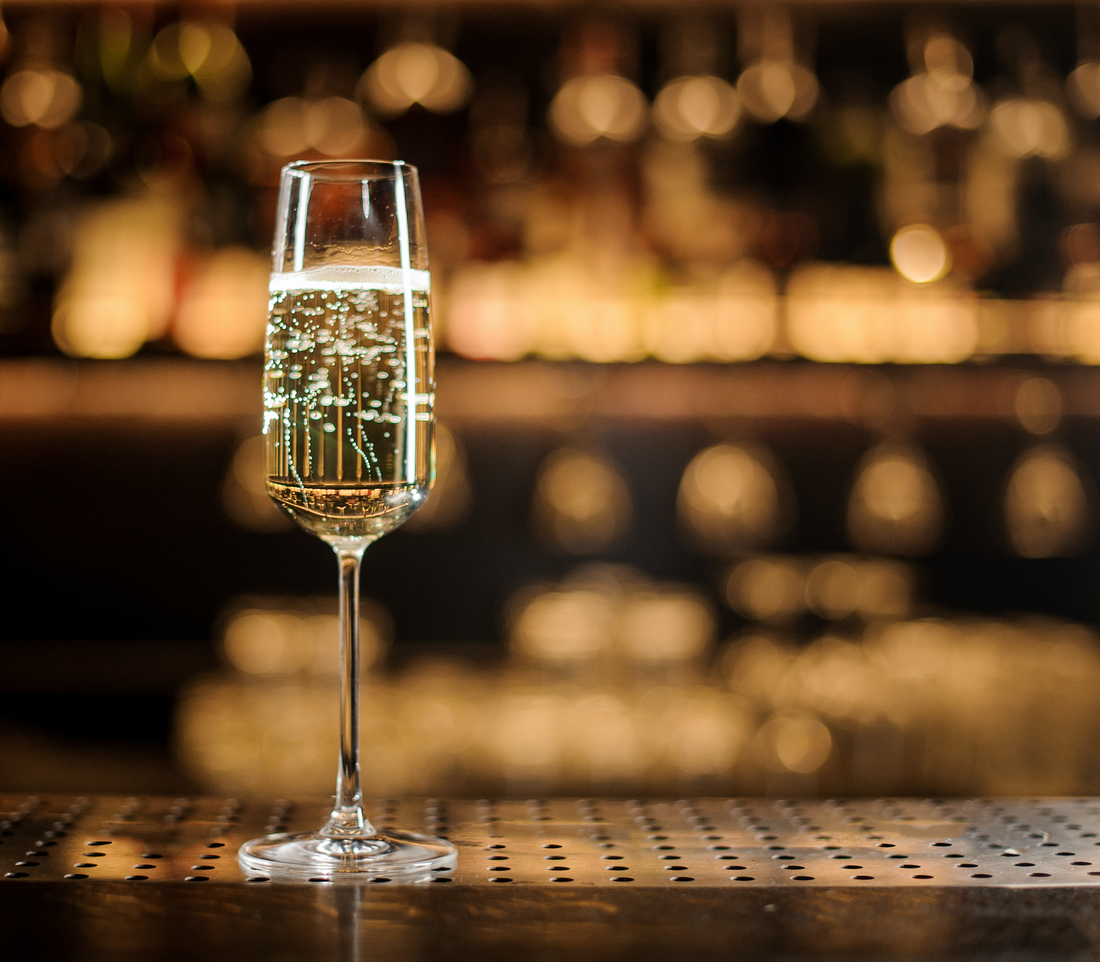
When we raise a glass of Champagne, the effervescence immediately catches the eye: tiny bubbles rising to the surface, creating a luminous and joyful dance. But did you know that more than a million bubbles can form in a single glass?
Effervescence: a unique phenomenon
In technical terms, what we see is not just "foam," but a real process called effervescence: the formation and rising of carbon dioxide bubbles within the wine. It should not be confused with mousse, the white foam that forms on the surface immediately after pouring.
The bubbles originate from microparticles of dust or tiny irregularities present in the glass. It is there that the first gas nuclei form, which then begin to rise to the surface, releasing aromas and sensations.
Why are bubbles so important?
Beyond the visual aspect, effervescence plays a key role in the aromatic perception of Champagne. When the bubbles burst on the surface, they release micro-droplets of wine that evaporate into the air, amplifying the olfactory complexity. It is also thanks to this phenomenon that we perceive the typical aromas of flowers, citrus, toasted bread, or nuts found in Champagne.
The glass makes a difference
The shape and cleanliness of the glass greatly influence the quality of the effervescence. A perfectly clean but not completely dry glass, for example, can reduce bubble formation. The ideal glasses for appreciating Champagne are those in which the effervescence can express itself freely: narrow flutes or, even better, tulip-shaped glasses.
A curiosity to remember
A glass of Champagne can contain more than a million bubbles, but each glass is unique, just like each bottle. Behind that slight effervescence lies a long process of precision and savoir-faire, jealously guarded by the Champagne region.